SimpleSwap is one of the better-known names in the instant exchange category. It is built for users who want a one-time conversion between wallets without the interface, custody model, or identity process of a full centralized exchange. It has been around long enough to feel more established than many swap widgets, although its core risks are still those of an intermediary service.
The service presents a straightforward choice: choose a crypto pair, select a floating or fixed quote where available, enter a payout address, and deposit the source asset. SimpleSwap then completes the exchange through its own infrastructure and liquidity partners. There is no familiar order book, no portfolio page full of pending orders, and no reason to leave assets sitting there after a transaction.
That simplicity is the attraction. A user with BTC in a hardware wallet can convert it to ETH, SOL, USDT, or another supported asset without first moving money through a large exchange account. It can also be useful where a traditional exchange does not support a particular coin or network. The experience is far less intimidating for an occasional user than placing market and withdrawal orders separately.
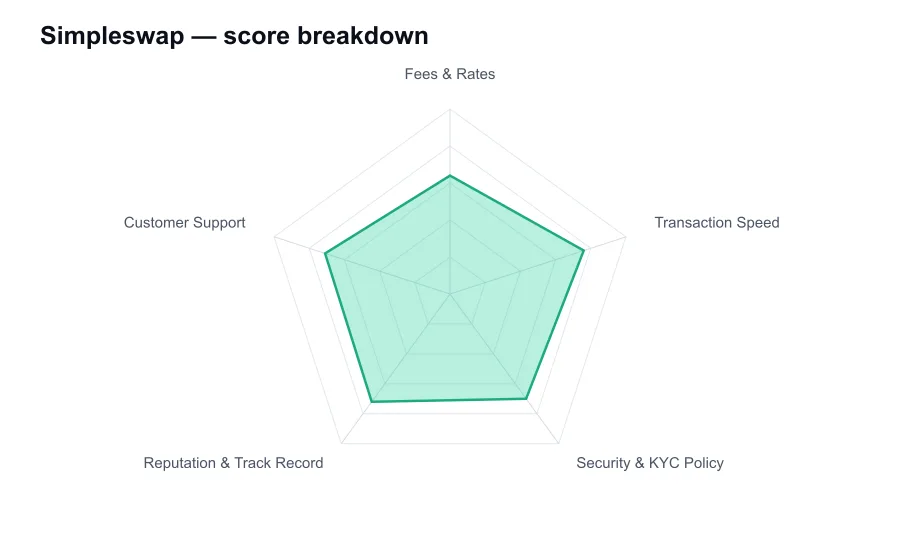
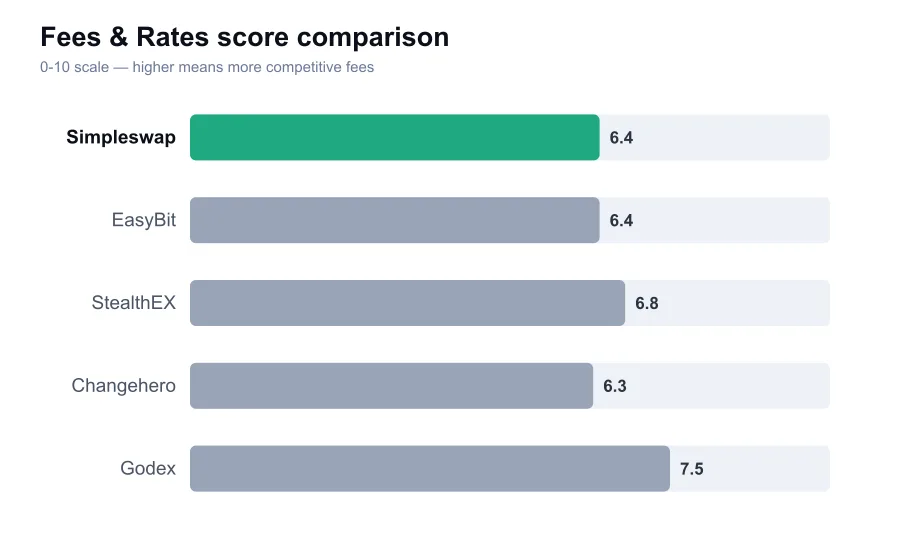
Pricing is less simple than the brand name suggests. SimpleSwap does not charge a universal visible percentage that applies to every transaction. The quote reflects its provider pricing, liquidity spread, and network costs. The amount shown before you send is the only meaningful number, and it should be compared with alternatives. For small swaps, the difference may be acceptable. For a five-figure transfer, it can be expensive.
The fixed-rate option is a genuine selling point for volatile pairs. It gives users a defined expected payout if they send within the stated timeframe and satisfy the transaction conditions. Floating-rate swaps may offer a more attractive initial number, but they expose the user to market movement while the incoming deposit confirms. Anyone swapping Bitcoin during a sharp market move should understand that distinction before pressing send.
SimpleSwap's quoted prices are often competitive enough for convenience-driven usage, but it should not be mistaken for a low-fee spot exchange. Kraken Pro, Coinbase Advanced, and Binance can be materially cheaper for users willing to complete KYC and manage their own trades. SimpleSwap earns its fee through friction reduction. It is not a venue for chasing the narrowest possible spread.
Transaction speed is generally good for common assets. An Ethereum or Tron stablecoin swap can move quickly when the networks are operating normally. Bitcoin-based transactions take longer because confirmation requirements are unavoidable, and some assets have slower chains or less deep liquidity. A transaction status page helps, but it cannot make a blockchain confirm faster or force a third-party liquidity provider to settle instantly.
Security is reasonable for the category, with one major qualification. SimpleSwap does not require users to maintain a custodial account balance, which cuts down the danger of leaving coins on a lesser-known exchange. But users still send assets into the service's transaction flow. You are relying on the platform's addresses, systems, liquidity relationships, and compliance decisions until the output is delivered.
The company applies AML procedures and can request KYC documentation for transactions that trigger its risk controls. That is not hidden in the fine print, but users sometimes discover it only after a swap becomes delayed. This is the biggest practical drawback of services marketed as registration-free. A routine transaction may need no documents, while an unusual source or amount can bring the process to a halt.
SimpleSwap has accumulated a stronger public track record than many smaller instant exchangers. It has operated for years, maintains partnerships and integrations, and has a large volume of public user feedback. That history matters. Still, review sites are not an insurance policy. The negative reports tend to focus on rate changes, delayed payouts, and verification disputes, which are exactly the issues a cautious buyer should expect to encounter in this niche.
Customer support is one of SimpleSwap's better points. It offers live-chat style assistance and transaction-specific support, and the service has a reputation for resolving ordinary address or timing questions more consistently than tiny anonymous competitors. The quality drops in the difficult cases. A compliance hold or disputed source-of-funds matter is not likely to be solved with a quick chat reply, no matter how polished the support widget looks.
Asset coverage is broad, including major coins, stablecoins, and a rotating list of smaller tokens. That breadth is useful, but it raises the chance of a network mistake. The service may list the same stablecoin across Ethereum, Tron, Polygon, BNB Smart Chain, and other routes. Read both the token name and chain label. A token ticker alone is not sufficient verification.
SimpleSwap also provides an API and exchange widget for partners. That is relevant because some third-party wallet or comparison sites may route a conversion through SimpleSwap without making the underlying provider obvious. If you use an embedded widget, verify who is actually handling the trade, what rate mode is selected, and where you will find transaction support if the payout is late.
My opinion is favorable, with limits. SimpleSwap is one of the more credible choices for an occasional instant swap, especially if you value fixed quotes and broad coin coverage. It is still an intermediary with opaque spreads and discretionary AML checks. Keep transactions modest, compare the all-in quote, and do not use it as a substitute for an exchange account where you need strong legal protections or consistently low costs.