Alfacash is one of the older names in the instant crypto exchange category. It sits somewhere between a simple swap desk and a broader custodial service, offering coin swaps, buying and selling options, and wallet features. It is aimed at people who want a transaction completed without opening a full trading account or learning an order book. That appeal remains real, though the service has never had the scale, polish, or public visibility of market leaders such as Kraken, Coinbase, or even ChangeNOW.
The basic experience is familiar. Pick a pair, enter the amount, provide a destination address, and send funds to the generated deposit address. Alfacash then converts the funds and pays out the target asset. For a straightforward BTC to ETH transaction, this can be far less intimidating than using a conventional exchange. There is no chart, no maker and taker schedule to decode, and no need to manage an open order.
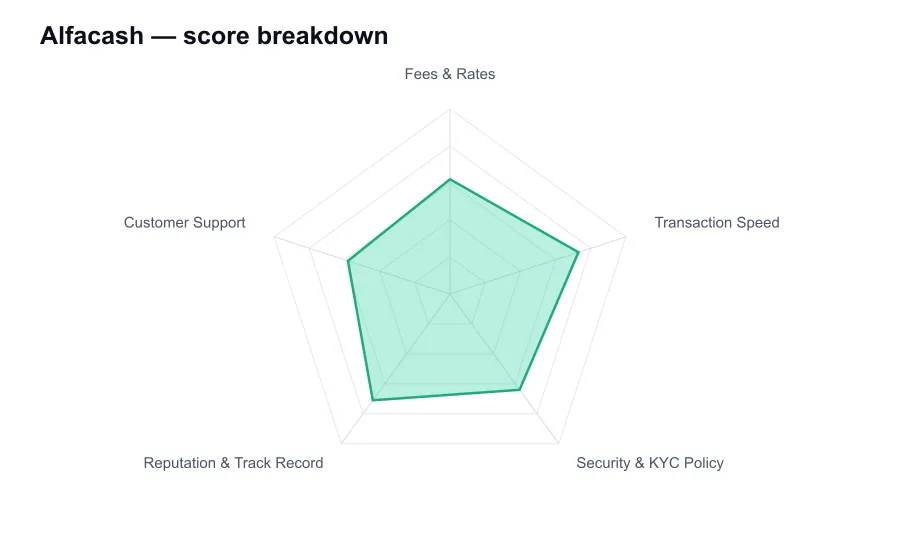
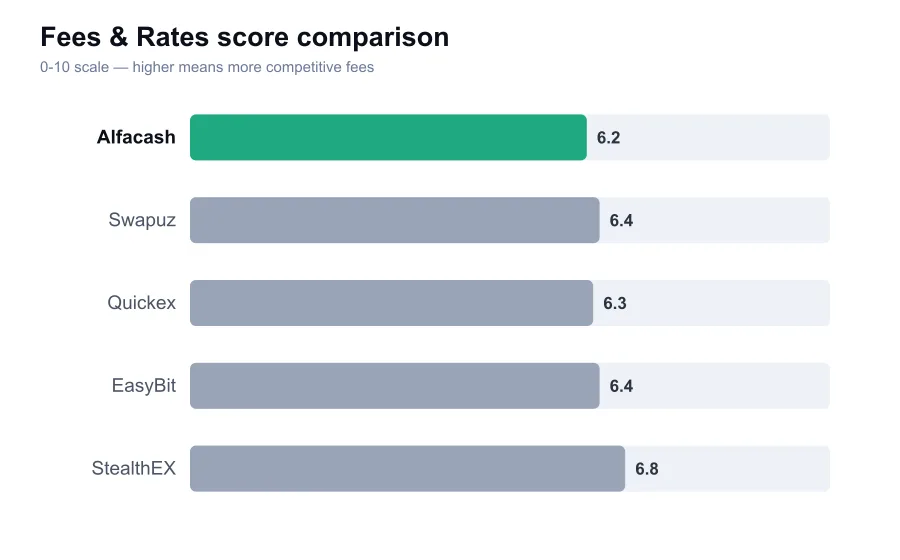
That simplicity does not mean the price is simple. Alfacash's costs are largely built into the quoted exchange rate rather than presented as one clean, universal percentage. This is standard for instant exchangers, but it makes direct comparison difficult. A user looking only at the amount sent and received may underestimate the spread, especially on less liquid assets or during sharp market moves.
For major pairs, the quotes can be reasonable enough if convenience matters more than extracting every last basis point. They are rarely the cheapest route for a larger trade. A trader with an account at Binance, Kraken, or Coinbase Advanced can often get a better execution price after accounting for trading fees, provided they are comfortable placing orders and dealing with withdrawal procedures. Alfacash is paying for speed and simplicity through the rate it offers.
The distinction between fixed and floating quotes matters here. A floating-rate transaction exposes the final payout to movement between the quote being displayed and the time Alfacash receives enough network confirmations. In calm conditions, the difference may be negligible. During a volatile Bitcoin move or a congested Ethereum period, it can be meaningful. Users should read the quote type carefully rather than assuming the first number on screen is guaranteed.
Speed is generally tied to the network being used more than to Alfacash's internal processing. A transaction using a quick, inexpensive network can settle quickly once the deposit has enough confirmations. Bitcoin deposits take longer, particularly when the sender has attached a low miner fee. Ethereum and token transactions can also stall if the network is congested. Alfacash is fast for an instant exchanger, but it cannot make a slow or underfunded blockchain transfer fast.
The service deserves credit for keeping the standard transaction flow short. There is no mandatory account creation for every ordinary swap, which reduces friction and limits the data a casual customer needs to hand over at the start. Still, calling it a guaranteed no-KYC service would be misleading. Alfacash reserves the right to request identity documents and source-of-funds information under its AML controls.
That policy is common, yet it can be uncomfortable in practice. A user who chose an instant exchanger specifically to avoid a lengthy onboarding process may find a transaction paused after funds have already been sent. The right way to think about Alfacash is conditional privacy, not anonymity. Routine transactions may proceed without documents, while risk flags, unusual volume, sanctions screening, or blockchain tracing results can trigger verification.
Alfacash has been around since 2013, and longevity counts in a part of crypto full of short-lived domains and anonymous copycat services. It has survived several market cycles, which gives it more credibility than a fresh swap site with no public history. That said, its reputation is functional rather than exceptional. It does not have the transparent financial reporting, prominent licensing profile, or independently audited reserves that inspire confidence in a top-tier custodial platform.
Customer feedback follows a pattern familiar to instant exchanges. Many users report uncomplicated, quick swaps, particularly for normal-sized transactions in liquid coins. Complaints are more likely to emerge around delayed orders, rate changes, failed payouts, or compliance reviews. This is not unique to Alfacash, but it is where its support quality matters most. An exchange is easy to like when everything is automatic. The real test starts when an order needs manual attention.
Support is available through the company's contact channels and ticket-style communication, but it does not feel like a premium, always-on concierge operation. Replies can be adequate for routine questions, though a time-sensitive blockchain issue may require patience. If you are moving funds needed for a same-day payment, that is a genuine drawback. Larger regulated exchanges have their own support problems, but their escalation paths and public accountability tend to be clearer.
The wallet side of Alfacash requires a different level of caution. Any custodial wallet means the provider controls the private keys. It can be useful for short-term convenience, but it should not be treated like a hardware wallet or a self-custody setup. Long-term holders should withdraw to an address they control once a conversion is complete. That advice applies to every hosted wallet, but it is particularly important with smaller providers.
There are also practical details that users should check before funding an order. Confirm the exact asset and network, particularly for stablecoins and wrapped tokens. Do not send from a platform that may deduct an unexpected withdrawal fee after you have entered the amount. Leave enough room for Bitcoin miner fees and Ethereum gas. A surprisingly large number of support disputes begin with a sender transferring a different network version of an asset than the destination can accept.
Alfacash is best judged as a serviceable convenience tool, not as a primary exchange relationship. Its long operating history and account-light swap flow are meaningful strengths. Its opaque all-in pricing, potential compliance interruptions, and modest support reputation keep it from being a first choice for high-value transactions. I would use it only after comparing the live quote against a trusted competitor and only for an amount I could afford to have delayed for a while.