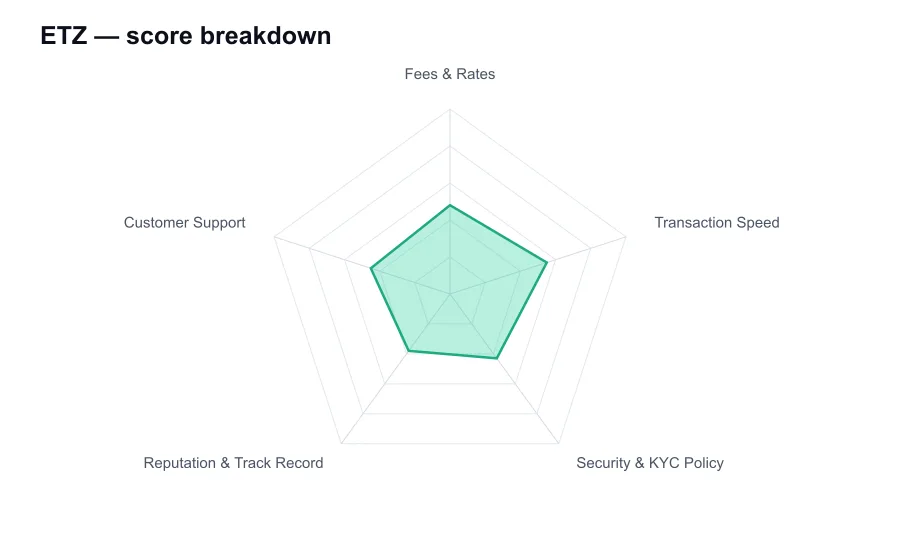
ETZ is a difficult provider to assess confidently because the name has far less public recognition and independently verifiable operating history than established instant exchanges. It appears in crypto exchange directories as a swap-oriented service rather than as a major order-book venue. That does not automatically make it unsafe, but it changes the standard a careful user should apply. With a smaller brand, the burden is on the service to explain who operates it, how it prices trades and what happens when something goes wrong.
The first thing I look for with a little-known exchange is clear corporate identity. A customer should be able to identify the legal operator, terms governing the transaction, support contacts and a usable complaints route. ETZ does not have the public profile of a regulated platform such as Kraken, Bitstamp or Coinbase, nor the long-running name recognition of Changelly. That means you should not give it trust simply because a comparison site lists it beside familiar names.
Its apparent use case is simple crypto conversion. A visitor selects a pair, receives a deposit address and expects the destination asset after the incoming transaction is confirmed. This can be handy for a small one-off swap. There is no reason to demand a full trading terminal for that job. Still, a bare interface is not the same thing as a strong service. The useful part of an exchange becomes visible during a delayed transaction, a wrong-network deposit or a compliance review.
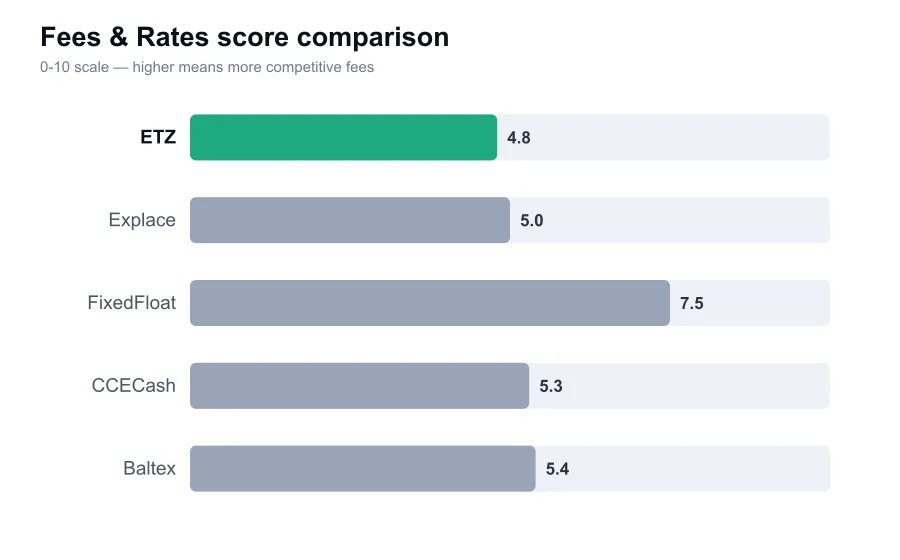
Pricing is the biggest unknown I would challenge before using ETZ. Instant exchangers often advertise no separate commission, yet that phrase can hide a meaningful rate spread. The displayed amount may include liquidity-provider costs, a service margin and mining fees. Without a plainly published fee schedule or a reliable way to compare quote construction, the only honest method is to obtain a live quote and compare the output against two alternatives.
That makes ETZ unsuitable for users who care about execution quality on larger trades. A one percent or two percent difference is easy to miss on a small conversion. On a larger amount, it is real money. Order-book exchanges reveal bid, ask and trading fees, while an instant exchanger asks you to accept a bundled price. A smaller provider with limited public liquidity information has to be judged even more harshly than a recognized aggregator.
Speed claims should also be read carefully. Any service can generate an address immediately. The relevant question is how quickly it identifies the deposit, secures liquidity, sends the payout and resolves exceptions. The blockchain is often the slowest link, particularly with Bitcoin and Ethereum during busy periods. But a provider's operational speed still matters after confirmations arrive. ETZ does not have enough public, verifiable service-performance data for me to award it much confidence here.
A clean swap can be fast because it is mostly automated. The difficult cases are not. Unsupported memo fields, a short payment, a late deposit after a rate expires and an incorrect chain can all turn a five-minute transaction into a support case. With a larger brand, there are usually more documented procedures and a broader record of users resolving these problems. With ETZ, I would assume nothing unless the exact asset and network guidance are clearly shown before sending.
KYC policy is another point where vague promises are dangerous. Services in this category may let a user initiate a transaction without creating an account, yet still screen wallet activity and request documents after a risk flag. That is different from a service that has no verification process at all. If ETZ presents itself as private or registration-free, users should read that as limited onboarding friction, not as a guarantee that funds cannot be held for compliance checks.
The custody model matters too. A swap service may be described as non-custodial because it does not hold an ongoing customer account. During the transaction, however, the platform or its partners control the inbound funds and the outgoing payout. That is a meaningful counterparty exposure. There is no private-key control over the deposit once you send it, so a customer needs enough confidence in the operator's processes to tolerate that temporary loss of control.
ETZ has no visible track record comparable to the market leaders. I found no basis to treat it as a proven, independently audited or heavily regulated institution. That does not prove misconduct. It does mean reputation should be scored conservatively rather than filled in with assumptions. Crypto has taught users this lesson repeatedly: a professional-looking swap page, a good rate and a few directory placements are not substitutes for years of transparent operations.
Customer support is where a lesser-known provider either earns repeat use or loses it. Before using ETZ, test the support channel with a specific question about a pair, minimum amount or network. See whether you receive a direct answer that identifies the relevant chain and policy, rather than a generic sales reply. If there is no prompt and accountable support before you deposit, there is no reason to expect a better experience after money is in transit.
I would be especially cautious with assets that require a destination tag or memo. XRP, XLM and some other networks can be unforgiving. Sending to an address without the required identifier may lead to a recovery process, and recovery is never guaranteed. The same goes for wrapped tokens and stablecoins. A label saying USDC or USDT is insufficient until you have confirmed the actual blockchain at both ends.
There is a place for smaller instant exchangers. They can sometimes source a pair that a mainstream venue does not offer, and they may be convenient where account onboarding is disproportionate to a small task. ETZ could be useful in that narrow role, after a careful quote comparison and a test transaction. It has not earned the kind of blind confidence that lets a user skip due diligence.
My view is blunt: ETZ belongs in the trial category, not the trusted-primary category. Use only an amount you could tolerate having delayed while you work with support. Check the destination network, archive the transaction details and verify the payout address character by character. If the conversion is large, urgent or tied to a business payment, choose a better-known exchange with a clearer operator, published policies and a longer public record.