Swapter is a smaller instant cryptocurrency exchange service that offers wallet-to-wallet conversions without a conventional trading account. It belongs to the same broad category as Quickex, SimpleSwap, and StealthEX, but it has a lighter public profile than those better-known competitors. That does not make it automatically unsafe, though it does mean caution should be part of the buying decision.
The user experience follows the standard instant exchange pattern. Choose the coins, enter an amount, provide a receiving address, and send the input asset to a generated deposit address. Swapter then processes the swap and sends the selected output asset to the destination wallet. The model is easy to use, especially for someone who does not want to manage an exchange account.
Convenience is the main reason to use a service like Swapter. It avoids account setup, trading screens, and the need to hold a balance with a centralized platform. For a small conversion between assets, that can be genuinely useful. It is also a sensible fallback if a user's usual exchange does not support a specific coin. The catch is that easy interfaces can conceal meaningful execution differences.
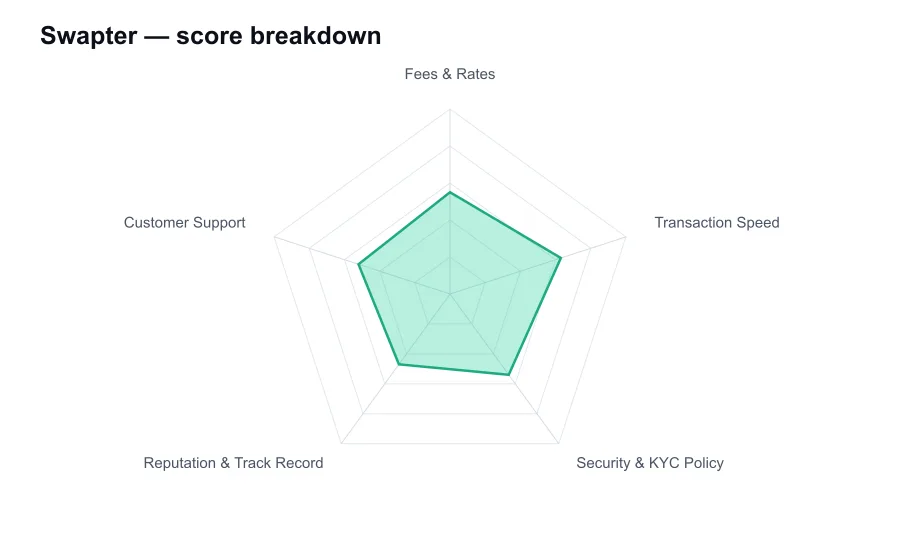
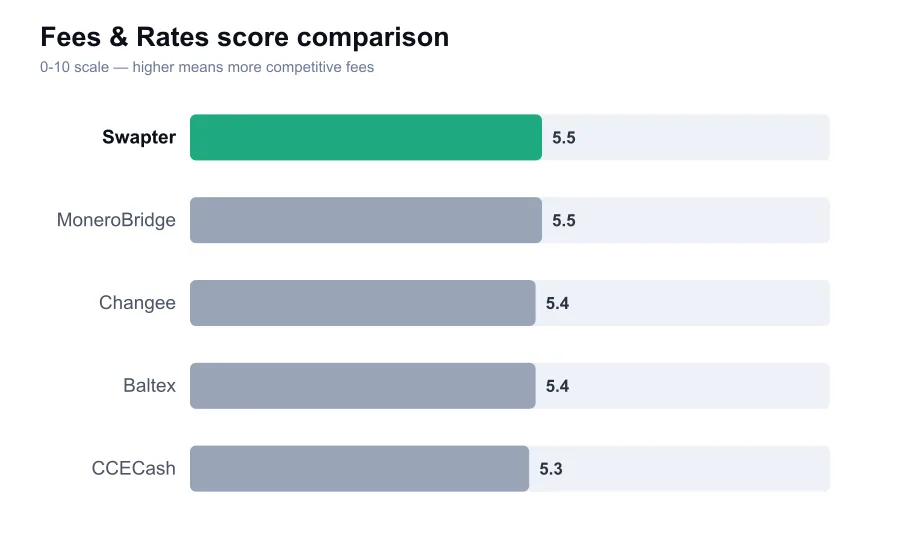
Swapter's pricing is quote-based rather than a transparent exchange fee schedule. The displayed rate is likely to incorporate liquidity-provider spread and network costs, and it can change by pair, amount, and market conditions. That is normal for instant exchangers, but Swapter gives users fewer reasons to assume its pricing is best in class. Compare its final payout directly against at least two alternatives before proceeding.
The provider is better suited to small and medium conversions than large purchases or active trading. A liquid BTC to USDT or ETH to USDC swap may look straightforward, but the embedded cost can still be larger than trading on a major exchange and withdrawing. If you are converting enough money that a one percent price difference matters, do the arithmetic rather than relying on a convenient quote screen.
Speed depends on the underlying assets and the provider's liquidity route. Common transactions may complete after normal blockchain confirmations, but no instant exchanger can remove confirmation requirements from Bitcoin or guarantee rapid settlement during Ethereum congestion. Swapter should be judged as a tool that can be quick under normal conditions, not as a service that promises immediate delivery in every situation.
The security proposition is limited by the nature of the service. Swapter is not a typical custodial exchange account where users leave funds for months, which lowers exposure to stored-balance hacks and account theft. Yet each transaction still requires trust. You send crypto into a provider-controlled processing flow and depend on the service to route, convert, and return the output correctly.
A smaller brand needs to earn confidence through clear policies, responsive support, and successful customer history. Swapter has less visible independent evidence than established names such as SimpleSwap and StealthEX. That is the central concern. A smaller public footprint does not prove bad conduct, but it gives a user less information to assess how the company handles an exception, a delayed payout, or a compliance dispute.
KYC and AML policies deserve particular attention. Like other instant exchangers, Swapter may allow a transaction to begin without a full registration process, yet reserve the right to request verification under compliance checks. That creates an awkward position for users who assume they are using a fully anonymous tool. Treat any no-account swap as potentially subject to review, especially if its source, amount, or destination could appear high risk.
Support is likely to be sufficient for basic order questions, but this is not where Swapter stands out. A transaction tracker, email response, or chat channel can solve a missing memo, an underpayment, or a confirmation delay. More serious cases need clear documentation and patience. I would not send a sum that requires immediate access unless I had already tested the provider and knew its response quality firsthand.
Network selection matters more than most users realize. Stablecoins and wrapped assets can exist on several chains, and an address format alone does not always tell you whether the destination is correct. Swapter users should verify the deposit network on the order page, then make sure the sending wallet uses that same chain. A mismatched token route can turn an inexpensive swap into a difficult recovery request.
The absence of a conventional account can be a benefit for privacy and usability, but it removes some safety nets. There may be no dashboard with extensive account history, no two-factor authentication setting, and no familiar withdrawal allowlist. Your protection comes from carefully verifying the transaction details, retaining records, and using a self-custody wallet where you control the receiving address.
For a first transaction, a small test is not optional advice. Send an amount you can afford to wait on, confirm that the output arrives, and assess the actual rate against the quoted rate. If the experience is clean, Swapter may be useful as another route in your instant-exchange toolkit. If a site has less public history, trust should be earned through behavior rather than marketing language.
My take is cautious. Swapter can serve a user who wants a simple one-off conversion and is prepared to compare quotes and test the service first. It does not have enough public depth to displace more established instant exchangers for significant transfers. Use it as a secondary option for small swaps, keep excellent records, and choose a larger regulated exchange for money that cannot tolerate uncertainty.