FixedFloat was one of the better known automated instant exchangers before its 2024 security crisis. Its appeal was obvious: no account, no personal profile, a fast quote engine, and two rate modes for people who either wanted the lowest estimated price or certainty about the final amount. For small, routine crypto swaps, it felt cleaner than opening an account at a conventional exchange.
The service operated as a non-custodial swap intermediary in the narrow sense that users sent funds directly to a transaction-specific deposit address, rather than maintaining a visible exchange balance. That reduces the usual risk of leaving coins parked on a platform. It does not make the service trustless. Once funds are sent to its address, the user depends on FixedFloat to complete the swap correctly.
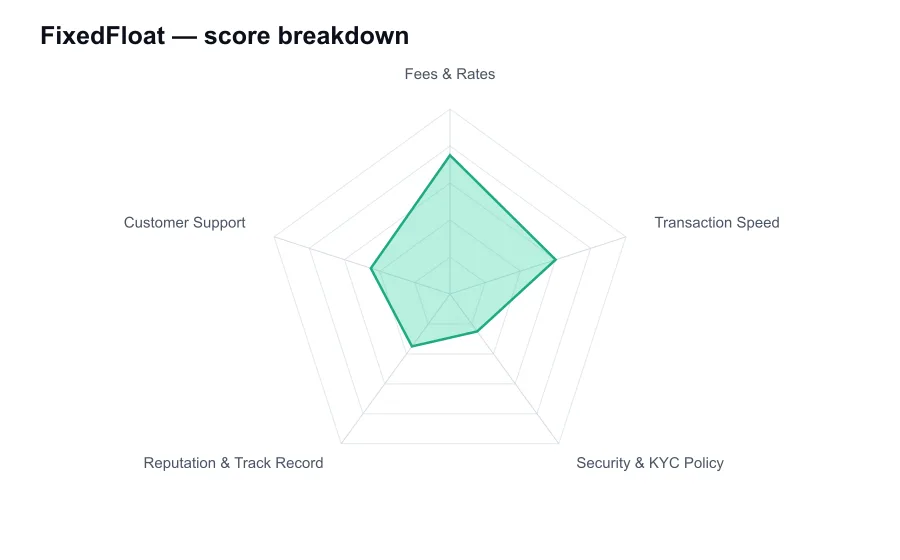
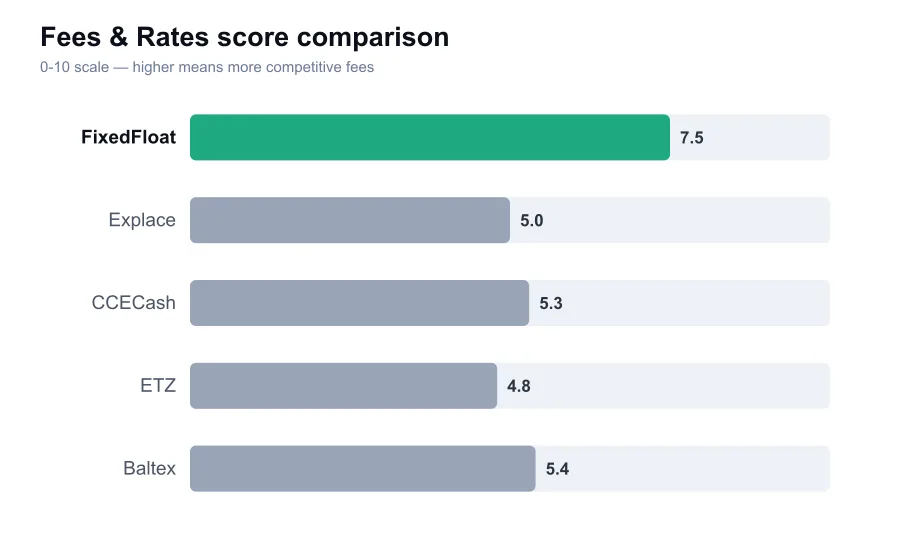
Its fee structure was refreshingly explicit by instant-exchange standards. FixedFloat historically advertised a 1% fee for floating-rate exchanges and a 0.5% fee for fixed-rate exchanges, before network charges. The fixed option could look counterintuitive because it carried the lower published service fee, but the quote also needed enough room to protect the provider from market movement while a transaction confirmed.
That distinction mattered most for Bitcoin, Ethereum, and other assets where confirmation delays can change the economics of a trade. A floating swap usually offered a more attractive initial estimate, then settled at the market rate detected after the deposit arrived. A fixed-rate swap locked the promised output for a stated time window. For users moving a meaningful amount during a volatile session, fixed pricing was the more sensible choice.
The problem is that a published percentage never tells the whole cost story. FixedFloat, like its peers, sourced liquidity and included execution spread in the quote. On liquid pairs such as BTC to USDT or ETH to BTC, the difference from a major spot exchange was often acceptable for the convenience. On thin altcoin pairs, the effective cost could become much larger than the headline fee.
Speed was one of FixedFloat's genuine strengths before operations were disrupted. Its automated model could process straightforward swaps soon after the incoming transaction received the required confirmations. Litecoin and Tron-based transfers could be completed quickly. Bitcoin, Ethereum, and congested networks naturally took longer, because the exchange could not safely send out the destination asset before its own risk rules accepted the deposit.
The interface handled the basics well. A customer chose the sending and receiving assets, entered an amount and payout address, reviewed the quote, and received a deposit address. The tracking page gave a transaction status without demanding a login. That was useful, though the lack of an account also meant users had to preserve their order ID and transaction hash carefully.
FixedFloat's privacy position attracted users who disliked mandatory onboarding for small swaps. It generally did not require routine KYC for ordinary transactions. That should never have been read as a guarantee of anonymity or an absolute promise that no review could happen. Blockchain tracing, sanctions screening, fraud controls, and legal demands can still lead an instant exchanger to ask questions or hold a transfer.
The decisive issue is the February 2024 hack. Blockchain investigators linked the incident to roughly $26 million in stolen Bitcoin and Ethereum, and FixedFloat publicly acknowledged that it had been attacked. The service then suspended operations. A security breach of that size changes the review substantially, even for a product designed around brief custody rather than long-term balances.
A breach does not automatically mean every customer lost funds, and it would be unfair to claim losses without evidence. Still, an instant exchanger is judged on whether it can safeguard deposits during the brief period that matters most. The incident exposed the central weakness of the model: users may not keep an account balance, but the provider still controls hot-wallet and settlement infrastructure while a swap is underway.
FixedFloat had built a decent reputation among privacy-focused swap users before the incident. It was frequently compared with ChangeNOW, SimpleSwap, and Godex because it was fast and straightforward. Its record cannot now be separated from the shutdown period and the uncertainty that followed. Past convenience doesn't compensate for unclear operational continuity.
Support was never the platform's strongest differentiator. The automated flow reduced the need for support when things went right, but crypto swaps are unforgiving when they do not. A delayed confirmation, wrong memo, unsupported token contract, or expired fixed-rate window needs a human response. Public feedback before the hack showed a mix of quick resolutions and frustrating waits.
I would treat any current availability with considerable caution. A live domain, social-media post, or search result is not enough reason to send a substantial amount. Users should verify that the service is actually processing recent orders, check official communications about the incident, and test only with an amount they can afford to lose before relying on it for anything larger.
FixedFloat deserves credit for a simple design, transparent advertised fee modes, and historically fast automation. Those strengths are now secondary to the security event and the uncertainty around its operating status. It was once a credible choice for low-friction swaps. Today, I would not treat it as a first-choice provider until there is sustained, independently verifiable evidence of stable operations and a convincing account of its post-hack safeguards.