Lizex presents itself as a cryptocurrency exchange service, but it occupies a difficult corner of the market: the small, lightly documented provider that asks users to trust a trading interface without supplying the public record that trust normally rests on. It is not a name that has earned broad recognition alongside established instant exchangers such as ChangeNOW, SimpleSwap, or StealthEX. That matters because crypto swaps are irreversible once sent.
The first problem is basic verification. I could not establish a strong, independently corroborated history for Lizex, a clearly identified operating company, or a long-running public footprint through the usual channels. A young provider is not automatically unsafe, but limited transparency substantially raises the standard a buyer should apply before depositing funds. Lizex has not cleared that standard for me.
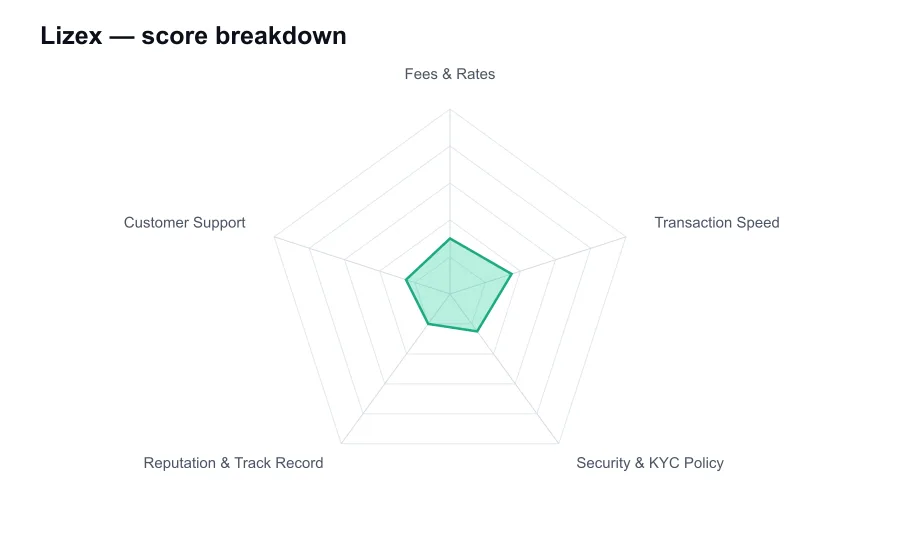
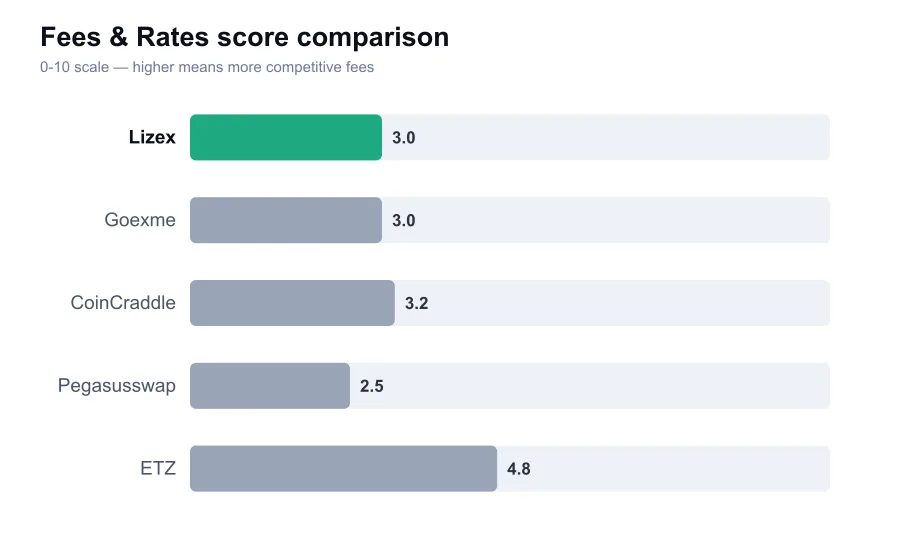
Its pricing is similarly hard to judge with confidence. A good exchange tells you whether its rate is fixed or floating, identifies its service charge, and makes clear whether network fees are included in the quote. Lizex does not have a widely documented, independently verifiable fee policy that lets a customer compare its economics against the major alternatives. That leaves users looking at the final quoted amount rather than evaluating the rate itself.
That is a poor position for a customer. The real cost of an instant swap is often buried in the spread between a reference market price and the amount delivered. A service can advertise a low fee while taking a large margin through its exchange rate. Without an archived fee page, transparent quote methodology, or reliable third party rate comparisons, Lizex deserves a low fee score even if a quoted transaction appears competitive.
The same uncertainty follows transaction speed. Small swap services commonly promise quick processing, but a promise is not proof of stable execution. Speed depends on deposit detection, blockchain confirmations, liquidity at the provider, compliance review, and the destination network. Bitcoin and Monero swaps can naturally take longer than an Ethereum token transfer, yet reliable providers explain those distinctions and publish realistic timing expectations.
Lizex has not built enough visible evidence to support a strong reliability claim. There is no established volume of independently reviewed transaction reports showing that it handles routine swaps promptly during busy market conditions. A user might receive a fast swap. That is very different from knowing that support will resolve a delayed transaction at 2 a.m. when an exchange rate is moving sharply.
Security claims should be assessed even more harshly. An instant exchanger usually receives the customer's deposit into a wallet it controls before it sends the output asset. That creates counterparty risk. The customer needs to know who operates the service, how the service handles suspicious transactions, what information it may request, and whether there is a usable escalation route if the transfer is held.
Lizex does not have the level of public company information, compliance documentation, security reporting, or long-lived community scrutiny I would want before trusting it with meaningful funds. A lack of public evidence is not evidence of a breach. It is, however, a very practical reason to avoid treating the service as battle tested. Crypto users should never confuse a functioning website with an established custodian.
KYC is another area where vague language becomes risky. Many exchange services market a simple non-registration flow, then reserve the right to request identity documents or proof of funds if an automated risk check triggers. That policy is common. The important question is whether the provider states it clearly, says what happens to a transaction during review, and offers a documented refund process. I could not verify those protections for Lizex.
Reputation is where Lizex falls furthest behind. It lacks the years of recognizable operations, substantial review base, visible team history, and trade press coverage that reduce uncertainty at larger competitors. There is no shortcut around this. If a provider is difficult to verify before a transaction, it may be equally difficult to reach after a problem arises.
Customer support is therefore not just a minor convenience issue. It is part of the risk calculation. A support email or chat widget can look reassuring, but customers should assess whether there is a public help center, documented response standards, active social channels, and evidence that unresolved cases receive answers. Lizex has not given me enough to score its support as dependable.
For a tiny test swap, some experienced users may be willing to experiment, provided they treat the money as fully at risk until the funds arrive. I would not send a large amount, use it for a time-sensitive payment, or rely on it to move funds during volatile markets. The potential saving is impossible to measure properly, while the downside is obvious.
There are far better documented options for users who want an instant exchange. Even services with no account requirement should have transparent terms, well indexed support material, a known operating history, and enough third party feedback to identify recurring problems. Lizex has too little of that public foundation.
My view is blunt: Lizex has not earned a recommendation for normal crypto users. The service may be operational, but operational is a very low bar for an exchange handling irreversible transfers. Until it provides much stronger ownership disclosure, fee clarity, policy documentation, and a durable independent reputation, it belongs in the high caution category.